



Guest User
Login
#0 Rank0 Coins
Dashboard
 Notification
 Coins
CoinsGames Categories
 New Games
Connect with us



 sports
 action
 cricket
 arcade
 racing
 adventure
 girls
girls boys
boys hot
hot moresportsactioncricketarcaderacingadventuregirlsboyshotmore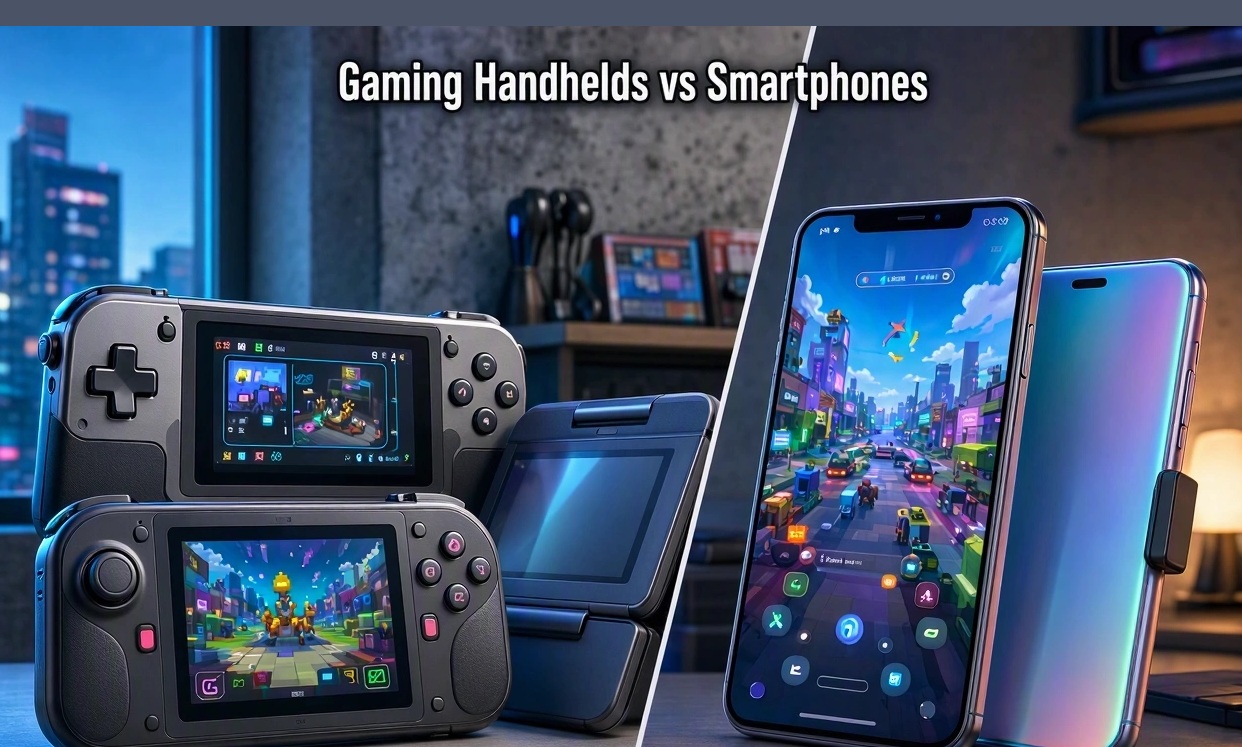
Casual gaming has changed quite a bit. You no longer need to sit in front of a TV or PC every time you want to play something. A smartphone is already in most people's pockets, while dedicated gaming handhelds have become more capable and easier to carry.
That raises a practical question for casual players: is your Android phone already good enough for mobile and browser gaming, or does a dedicated gaming handheld offer enough of an improvement to justify carrying another device?
There isn't one answer for everyone. Someone who plays a browser puzzle game for ten minutes during a break may find a phone hard to beat. Someone who spends an hour playing an RPG, racing game or controller-based title may prefer the physical controls and comfort of a handheld.
The biggest strength of a smartphone is that you already have one.
There is nothing extra to charge, remember or carry. If you have five minutes while waiting for an appointment, you can open a game and start playing.
Phones are particularly convenient for:
Puzzle games
Card games
Casual strategy
Word games
Simple arcade titles
Short multiplayer sessions
The touchscreen also works well for games designed around tapping and swiping. For these games, physical controls aren't necessarily an improvement.
And there is another benefit: your phone can do far more than play games. Buying a separate device purely for occasional gaming may not make financial sense.
The situation changes when a "quick game" turns into a 45-minute session.
Touch controls can become frustrating when a game needs two analogue sticks, triggers and several buttons. Your fingers can cover parts of the screen, and the experience doesn't always feel natural.
A dedicated gaming handheld solves that immediately.
You get proper:
Analogue sticks
Face buttons
Shoulder buttons
Triggers
D-pad
Ergonomic grips
It feels closer to using a traditional console controller because that is essentially what the handheld is built around.
This is where the comparison gets interesting.
You don't necessarily have to choose between a phone and dedicated gaming hardware. A controller can turn a compatible iPhone or Android device into something that looks and feels much closer to a portable console.
Current mobile controllers range from compact clip-on designs to full-size grip-style models. WIRED's 2026 testing found that controllers such as the Backbone One can provide a comfortable experience for extended sessions, while models such as the GameSir G8 Galileo offer larger grips, Hall-effect controls and pass-through charging.
So, if you already own a powerful phone, spending money on a controller may be a much cheaper experiment than buying a completely separate handheld.
Browser games are an interesting middle ground because they don't necessarily require a dedicated gaming device. A lightweight browser game can run perfectly well on an Android phone, while a controller-compatible browser game can become much more comfortable when paired with physical controls.
The main issue is compatibility. A dedicated handheld designed for PC games may provide excellent controls but doesn't automatically make every browser game available or compatible. On Android, the browser, game and controller all need to work together.
This is probably the most important part of the comparison.
Don't choose the device first. Choose the games first.
A phone is excellent if your library mainly consists of mobile-native games. Android and iOS now have plenty of premium titles as well, including games such as Dead Cells, Stardew Valley, GRID Legends and other controller-supported releases.
A dedicated PC handheld becomes more interesting if you want access to a broader PC library.
For example, someone who wants to play demanding PC games, older PC titles or a large Steam library while away from a desk will probably get more from a handheld than from a standard smartphone.
What games do you want to play, and what controls do those games require?
Game type | Smartphone | Handheld |
|---|
Puzzle browser games | Excellent | Usually unnecessary |
Card games | Excellent | Usually unnecessary |
Touch-based arcade games | Excellent | Good |
Racing games | Good with controller | Excellent |
Action games | Good with controller | Excellent |
Strategy games | Good | Good |
PC browser games | Depends on controls | Better with compatible handheld |
Cloud gaming | Good with controller | Excellent |
Long RPG sessions | Good with controller | Excellent |
Imagine playing a racing game using touchscreen buttons.
It works.
Now play the same game with proper triggers and analogue controls.
The difference is immediately noticeable.
This is particularly true for:
Racing games
Action games
Platformers
Fighting games
Third-person adventures
Shooters
Touch controls aren't bad. They're simply better suited to games designed around them.
A controller-equipped phone can close some of the gap, but a dedicated handheld still has the advantage of having the controls permanently attached and designed as part of the device.
Here, the smartphone wins easily.
A phone also lets you open a browser game without planning ahead. There's no need to decide which games to install on a separate device before leaving home.
That's not necessarily a deal-breaker, but casual players should ask themselves whether they'll actually carry it.
A useful way to look at it is:
Situation | Better choice | Reason |
|---|
Browser games | Smartphone | Convenient and easy to access |
5–10 minute sessions | Smartphone | Already in your pocket |
PC games | PC handheld | Broader PC compatibility |
Long RPG sessions | Handheld | Better physical controls |
Racing games | Handheld/controller | Physical triggers and analogue controls |
Travel | Depends | Size and battery life matter |
Cloud gaming | Either | Controller support matters more |
Casual puzzle games | Smartphone | Quick and convenient |
Your phone has another job besides gaming. It needs to remain available for calls, messages, maps, photos and other everyday tasks. Spending several hours gaming can therefore be inconvenient if you need the phone later.
A dedicated handheld separates the two. You can drain the handheld's battery without worrying about arriving somewhere with 15% phone battery. That sounds like a small advantage, but it becomes useful during long trips.
The downside is obvious: now you have two batteries to charge.
A smartphone is thin and lightweight, but that doesn't automatically make it comfortable for gaming.
Holding a phone by its edges for a long time can feel awkward, particularly when you're playing a game that needs constant inputs. A dedicated handheld is shaped around your hands. That extra bulk is actually useful.
The same is true if you add a large controller to a phone. You gain comfort, but you've also made the setup considerably bigger.
Current 2026 controller testing shows that larger phone controllers can provide much more comfortable long-session gaming, but they sacrifice some portability compared with slimmer models.
If you already own a good smartphone, the cheapest option is obvious: use what you have.
You might spend nothing. A controller is the next step if touchscreen controls are holding you back. Dedicated handhelds come later if you want a more complete gaming experience.
The mistake would be buying an expensive handheld for games that your phone already handles perfectly well. On the other hand, if you're regularly using cloud gaming, remote play or controller-based games, the cost of a handheld may be easier to justify.
I'd keep it simple.
Choose your smartphone if:
You play in short bursts
You mostly play mobile games
Portability is your priority
You don't want another device to charge
Touch controls don't bother you
Choose a handheld if:
You regularly play for 30 minutes or longer
You prefer physical controls
You want PC or console-style games
You play RPGs, racing games or action titles
You want a device dedicated to gaming
And there is a middle option: use your smartphone with a good controller.
That can be surprisingly effective. In 2026, mobile controllers are good enough to make a phone feel much closer to a traditional portable console, and several support remote play and cloud gaming services as well.
Atmegame.com is a completely new platform for the online games lovers.The best part is that all games available on our website are free and can be enjoyable on multiple devices, including desktop, mobile phones, tablets, and iPhones or iPads.
